You might also like
Dive deeper – explore more blogs about real estate industry.

You are not buying the development. You are buying one stack, on one floor, with one facing — and the spread is wide.

The most expensive mistake in a luxury condominium purchase is rarely the development. It is the unit.
A large project is not one asset, it is several hundred, and they are not interchangeable. Floor level, facing, stack position, layout efficiency and outlook all price differently, and the spread within a single development can be wider than the spread between two developments in the same district. A high floor with an unblockable view and a low floor facing the neighbouring block carry the same address and very different resale prospects. The brochure will not tell you which stacks will be built out in five years. The URA Master Plan and a walk around the site will.
Efficiency is the second thing to check and the easiest to miss. Two units of identical stated area can differ substantially in usable space once planters, bay windows, air-conditioner ledges and awkward circulation are accounted for. You pay the same price per square foot for both. You live in only one of them.
Then the arithmetic of entry and exit, which sets the horizon whether you like it or not. Buyer's Stamp Duty runs to 6% at the top tier above S$3 million, and ABSD adds 20% for a Singapore Citizen's second property, 30% for a PR's second, and 60% for a foreign buyer. On the way out, Seller's Stamp Duty on anything bought since 4 July 2025 runs 16%, 12%, 8% and 4% across four years before reaching zero. A luxury condominium bought today is a four-year commitment at minimum, and realistically longer, because the entry costs need time to amortise against gross yields that typically sit between 2.7% and 3.1%.
Financing sets the last boundary. A first housing loan is capped at 75% loan-to-value, a second at 45%, computed on the lower of price or valuation — so a purchase above valuation increases the cash required on completion, not the loan.
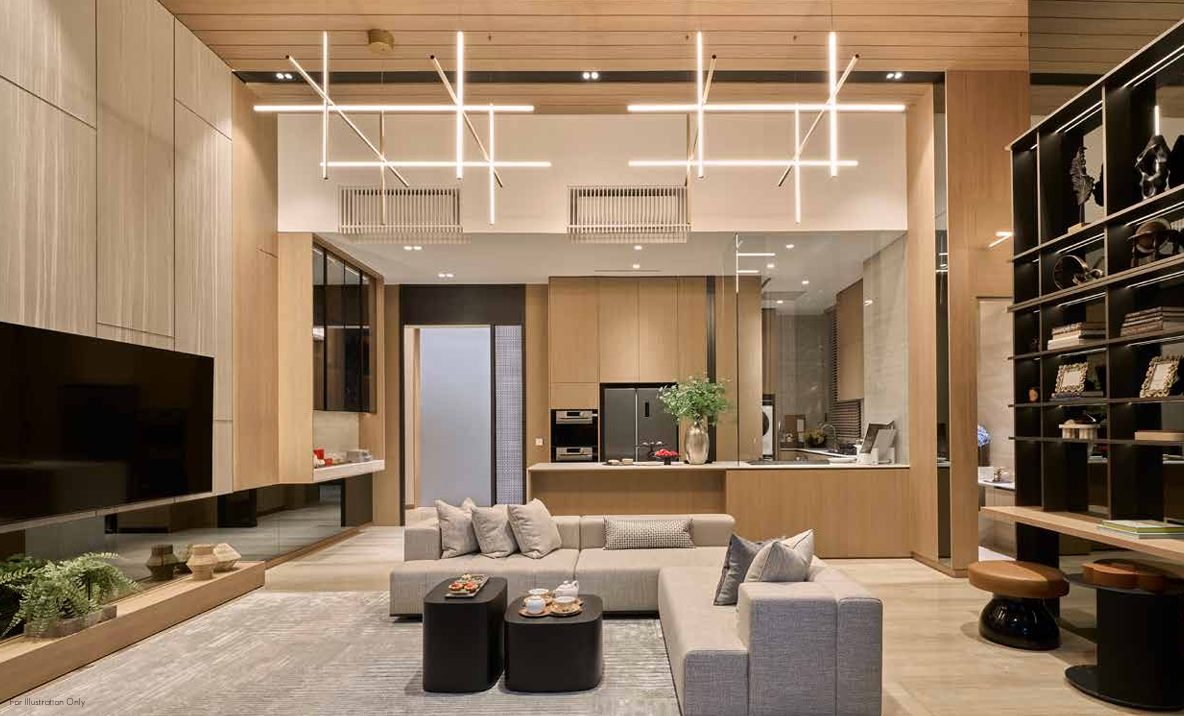
None of this argues against buying. It argues for buying the specific unit rather than the marketing. The buyers who do well in this segment are the ones who treated a S$4 million purchase as a S$4 million decision — asking which stack, which floor, which facing, and what gets built next door — rather than a decision about which development had the better showflat.