
There are more billionaires in Singapore than there are Good Class Bungalows available to buy in a given year. That single sentence explains most of what follows.
A Good Class Bungalow — GCB — is not a marketing term, a style of architecture, or a description of a large house. It is a planning classification. A property either sits inside one of 39 areas gazetted by the Urban Redevelopment Authority and meets a specific set of controls, or it does not. No amount of land, money or ambition can create a new one.
This guide sets out what the classification actually requires, who is permitted to buy, what the market has been doing, and what the rules mean in practice when you are standing on a plot deciding whether to make an offer.
Three tests, all of which must be met.
Everything else — the price, the architecture, the neighbours — follows from those three constraints.
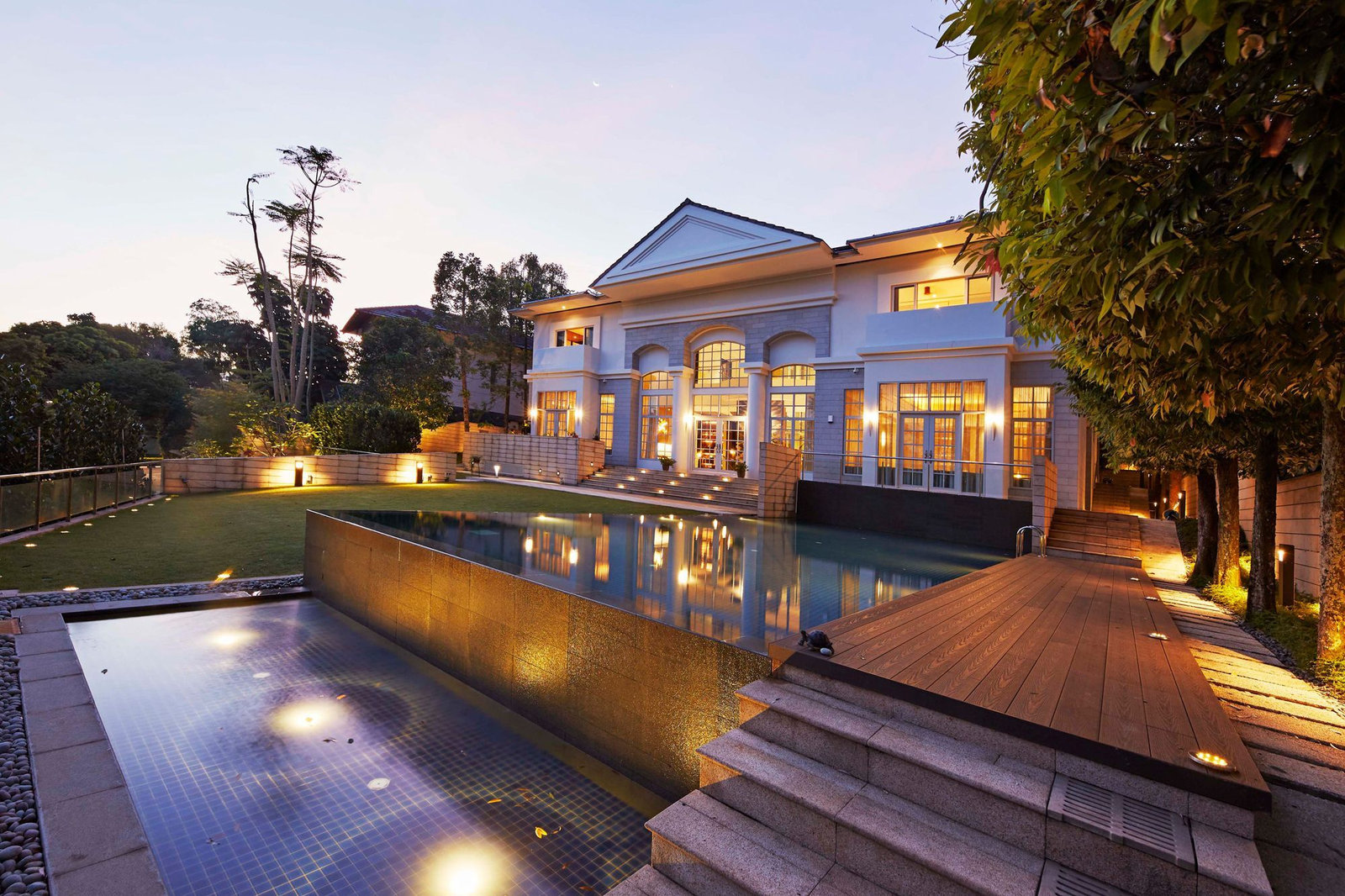
There are roughly 2,800 GCB plots in Singapore. Not 2,800 for sale — 2,800 in existence, the overwhelming majority held by families with no intention of selling.
In an active year, perhaps 60 to 90 transactions are registered across all 39 areas combined. In a quiet year, fewer. Singapore's private residential market as a whole turns over tens of thousands of units annually; the GCB market is a rounding error on that number. It is why a plot can sit unsold for two years and then draw three competing offers in a fortnight.
The list of gazetted areas has not expanded materially since designation began. Supply here does not respond to demand. It simply does not move.
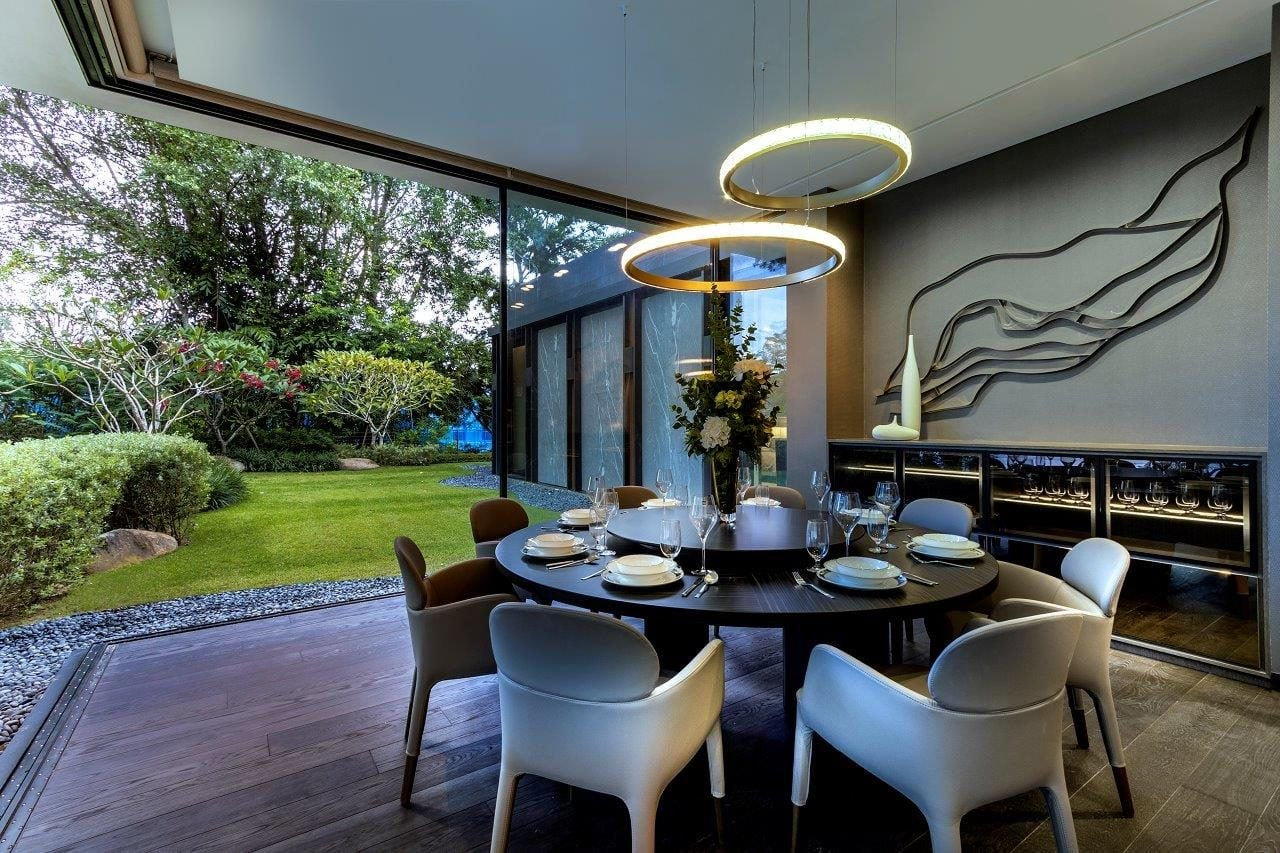
A property qualifies only if it sits inside one of URA's 39 gazetted Good Class Bungalow Areas:
Three of these — White House Park/Nassim Road, Chatsworth Park, and Holland Park/Ridout Park — contain conservation areas, where conservation guidelines apply on top of the standard GCB controls. If a house on your shortlist is gazetted for conservation, your redevelopment options narrow considerably. It is the first thing worth checking, not the last.
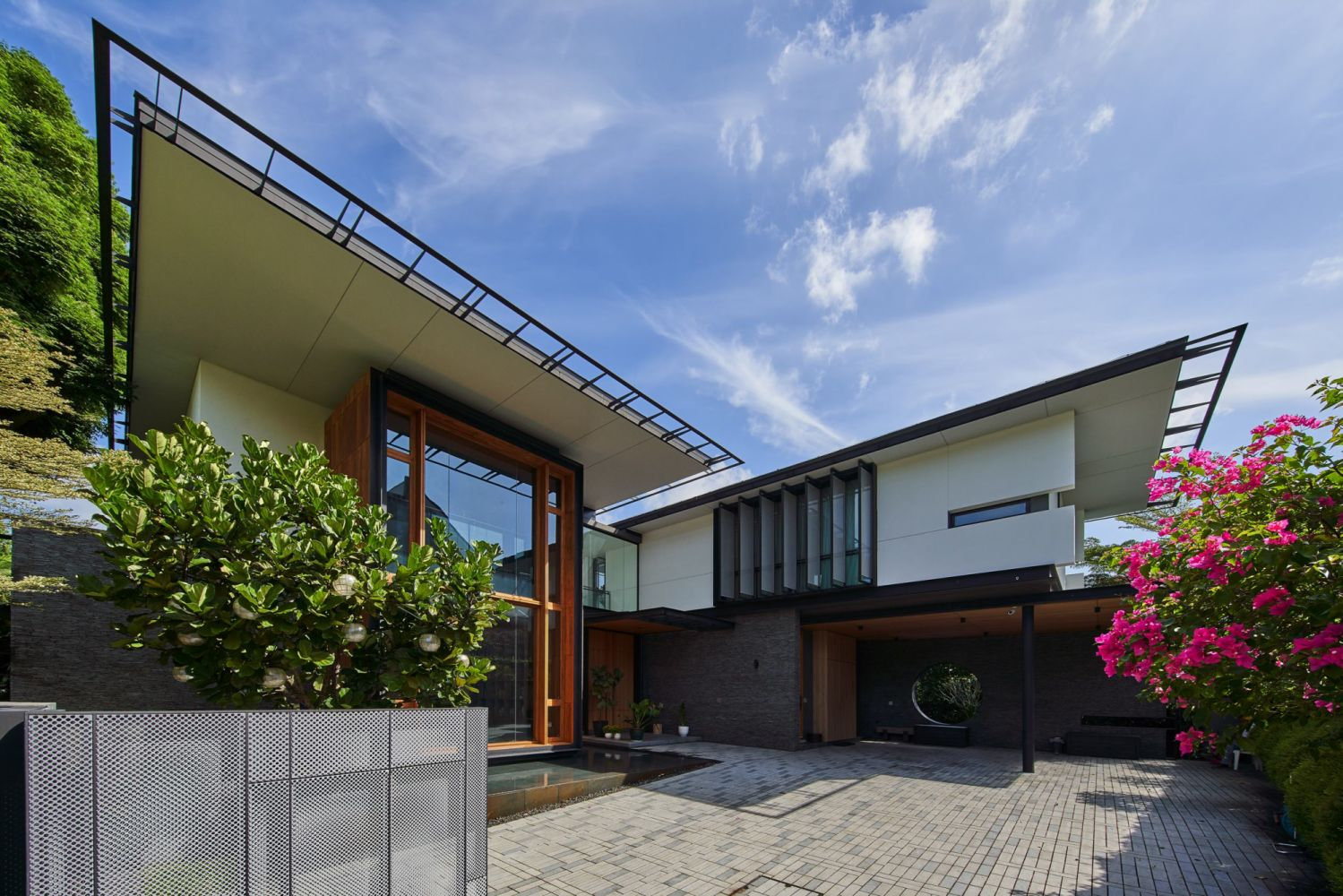
The 1,400 square metre minimum is the figure everyone quotes. It is also the one that catches buyers out, because area alone is not enough.
A qualifying plot must be at least 1,400 sqm in area, 18.5 metres wide, and 30 metres deep. A long, narrow plot of 1,500 sqm measuring 16 metres across does not qualify for redevelopment as a new GCB, whatever its total area.
Some plots inside GCB Areas fall below the minimum because they were subdivided before the current rules took effect. These are still GCBs and still trade as such — but they cannot be subdivided further. URA permits only narrow exceptions: in subdivisions involving a conserved bungalow, one residual plot of not less than 1,000 sqm may be allowed per conserved bungalow.
The reverse question — can a large plot be split in two? — has the same answer read backwards. Only if every resulting plot independently clears 1,400 sqm, 18.5 metres and 30 metres. On most plots the arithmetic does not work, which is why subdivision is a rare event rather than a routine value-add strategy.
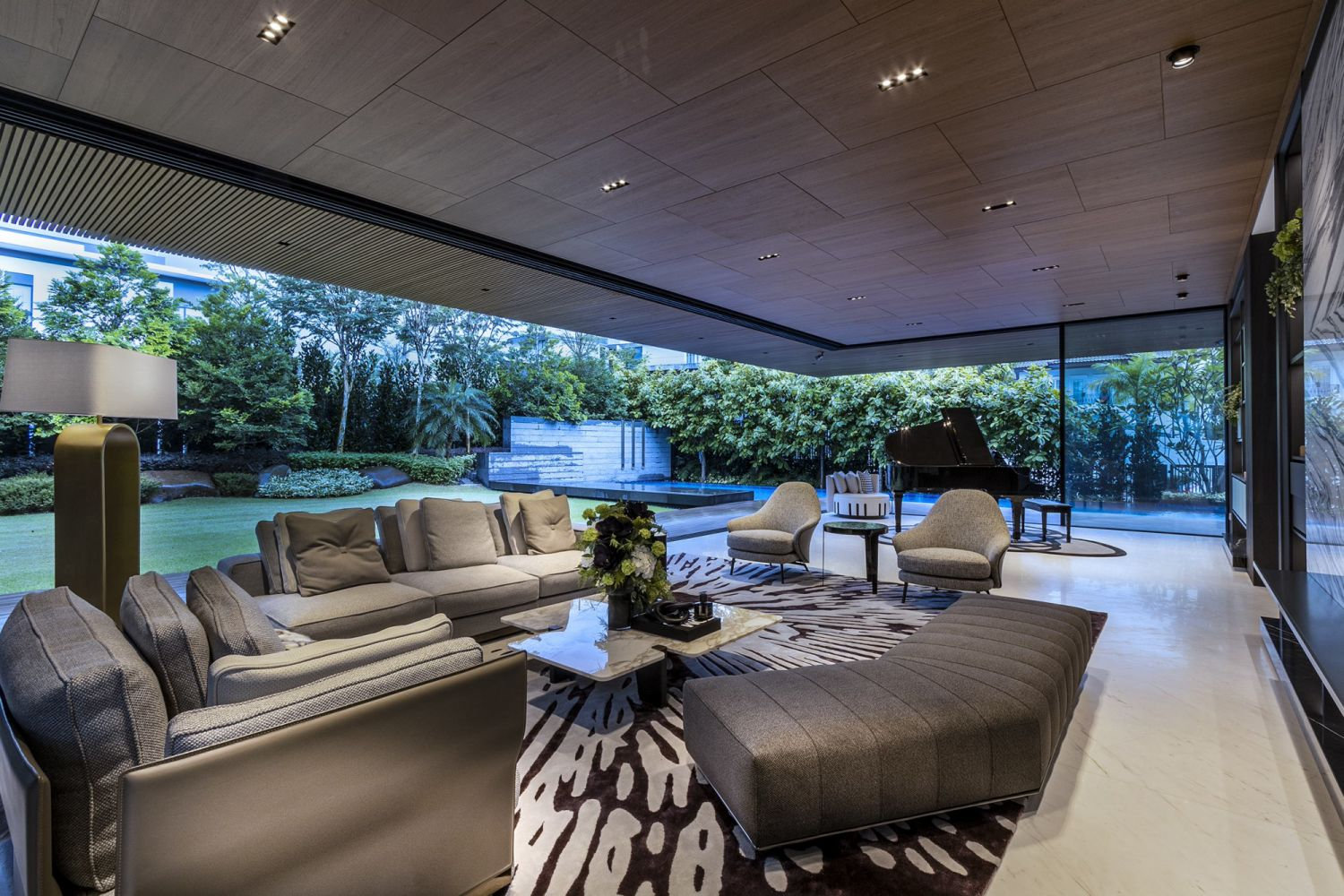
GCB Areas are designated two-storey under the Master Plan's landed housing storey-height control, with an overall height limit of 12 metres measured from the external platform level.
Worth being precise about the mechanism: the two-storey cap is not a rule about GCBs as such. It comes from the storey-height designation applied to the area in the Master Plan. In GCB Areas that designation is consistently two storeys — but it is the Master Plan, not the GCB label, doing the work.
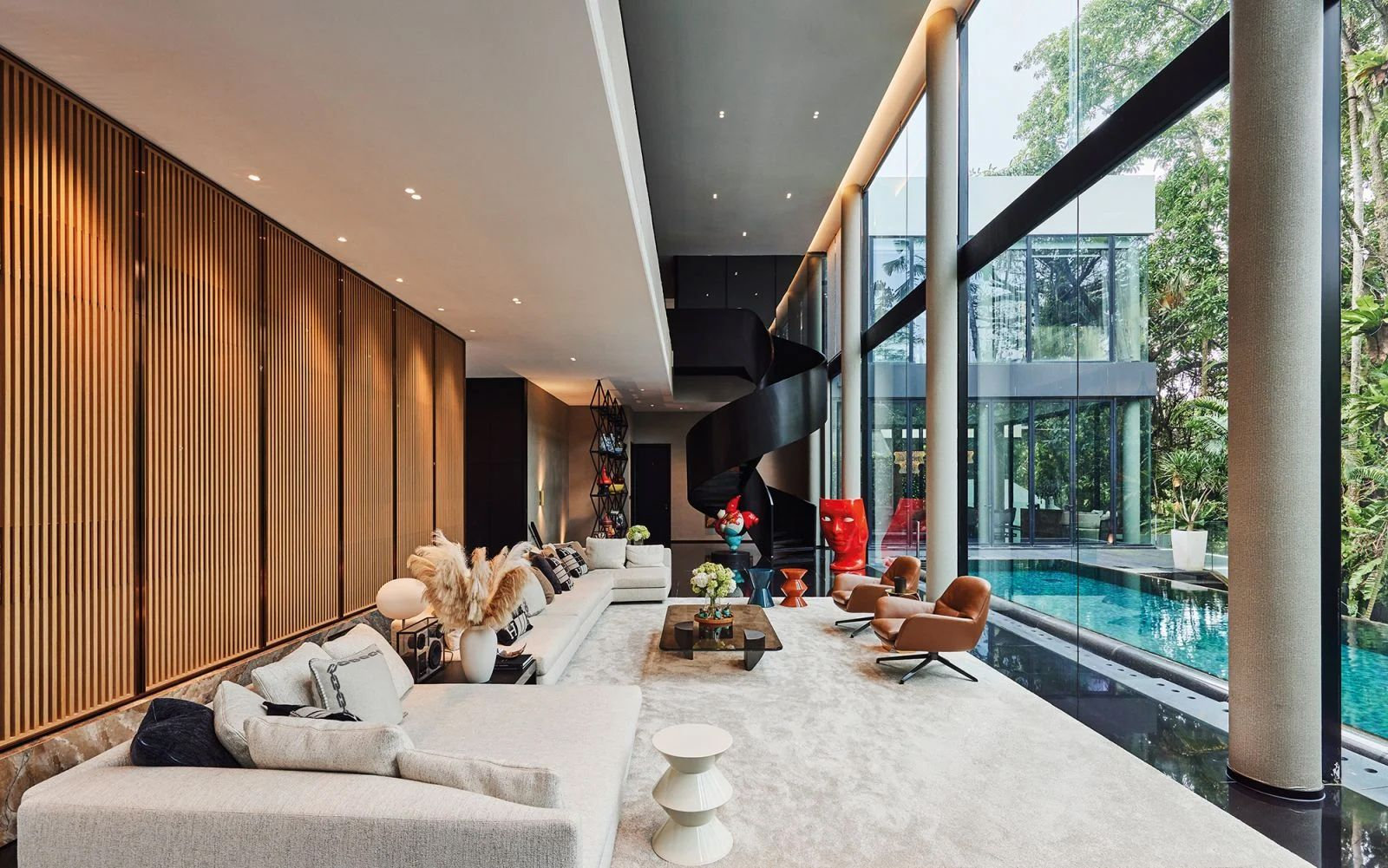
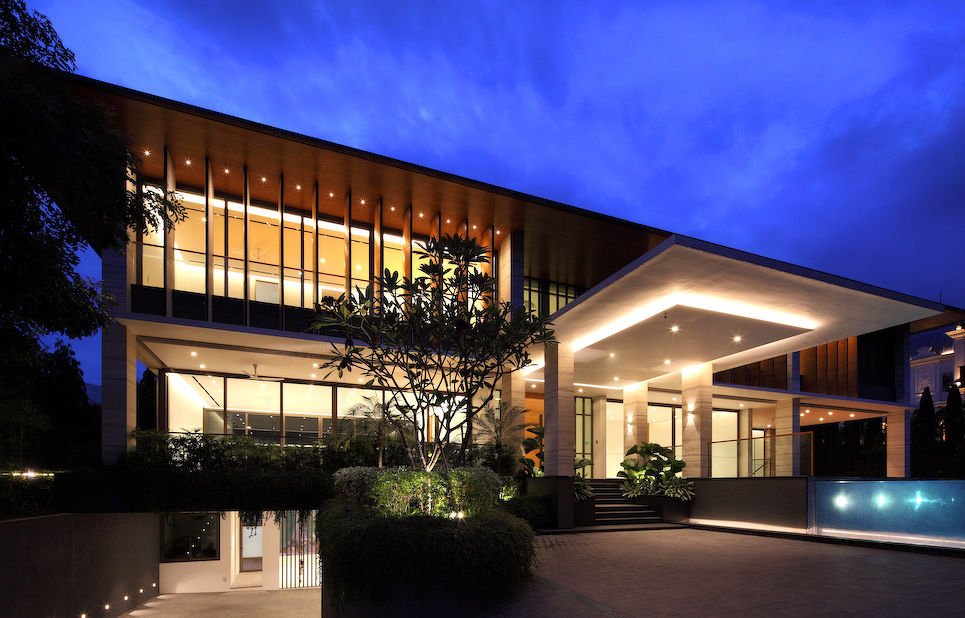
Within that envelope you may still build an attic and a basement. This is where GCB architecture gets interesting. The visible house is deliberately modest against the size of its grounds; the volume goes down rather than up. Basement levels housing car galleries, wine rooms, gyms, cinemas and staff accommodation are routine — and they are why a “two-storey” GCB can offer 20,000 square feet of built area without ever looking imposing from the road.
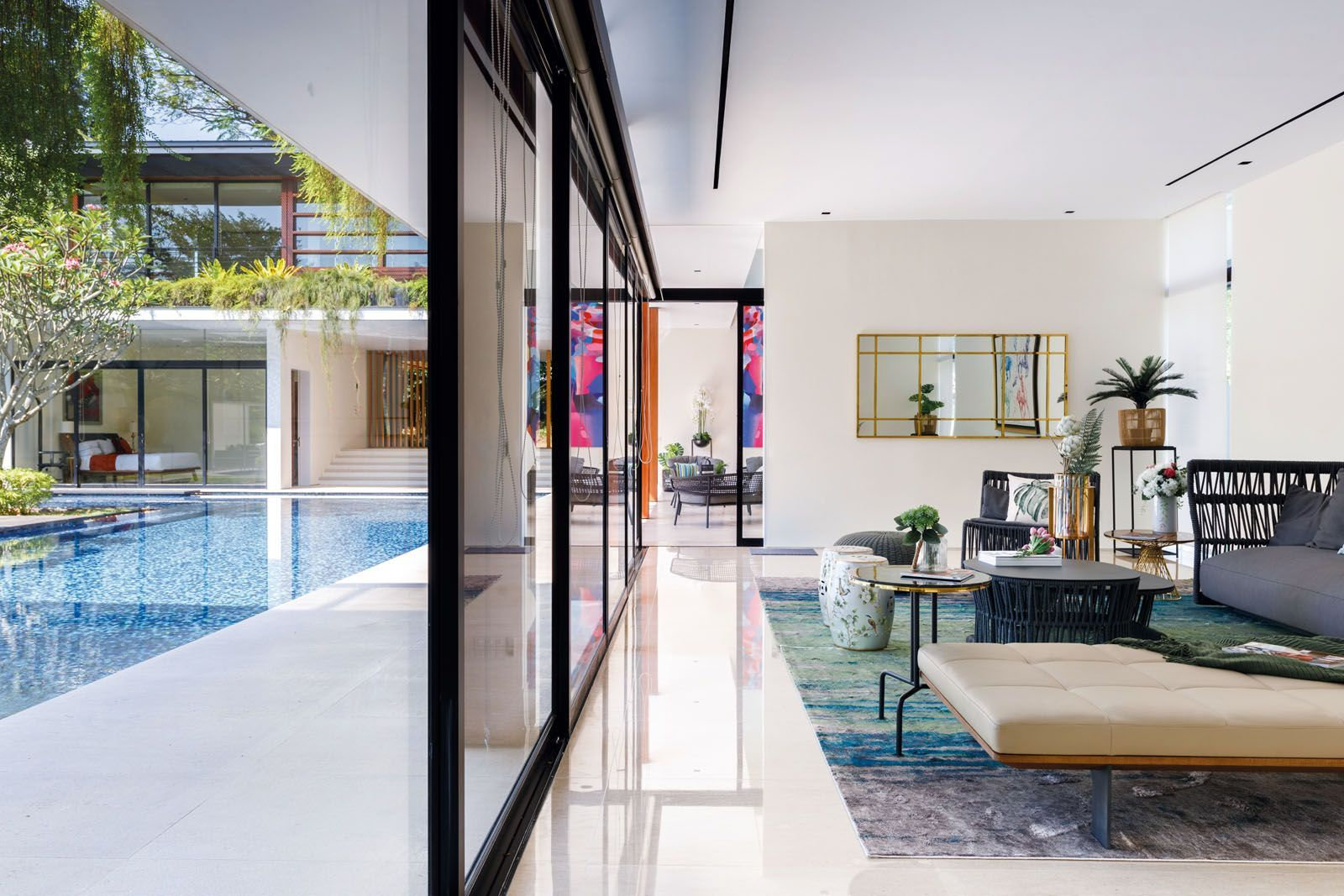
This is the control most often misquoted, so it is worth stating carefully. URA applies a two-tier site coverage control to bungalows in GCB Areas, revised for applications submitted on or after 1 March 2025.
| Control | Maximum | What it counts |
|---|---|---|
| Overall site coverage | 45% | All building structures, including sun-shading features — roof eaves, ledges, trellises, fins — plus balconies, planters, bay windows and 50% of the car porch roof |
| Sub-control | 35% | The same measure with sun-shading features excluded — a cap on the bulk of the house itself |
Both must be satisfied. The practical effect is a house that is generously proportioned but never dominant, where the shading and articulation that suit a tropical climate do not come at the cost of internal space.
One misconception is worth retiring: the land not covered by the house is not required to be greenery. Site coverage counts building structures — driveways, pools and hard landscaping are not restricted by it. Greenery is protected by a separate mechanism: the green buffers required within road setbacks, running to 5 metres inside the larger Category 1 and 2 road buffers and 3 metres inside Categories 3 and 4. Setbacks from common boundaries in GCB Areas are 3 metres for the main building and 1.6 metres for roof eaves — half again as generous as bungalows outside a GCB Area.
Low coverage, deep road buffers, wide side setbacks, mature trees that predate everyone on the street. Together they produce the particular quality of a GCB estate that no condominium, at any price, reproduces.
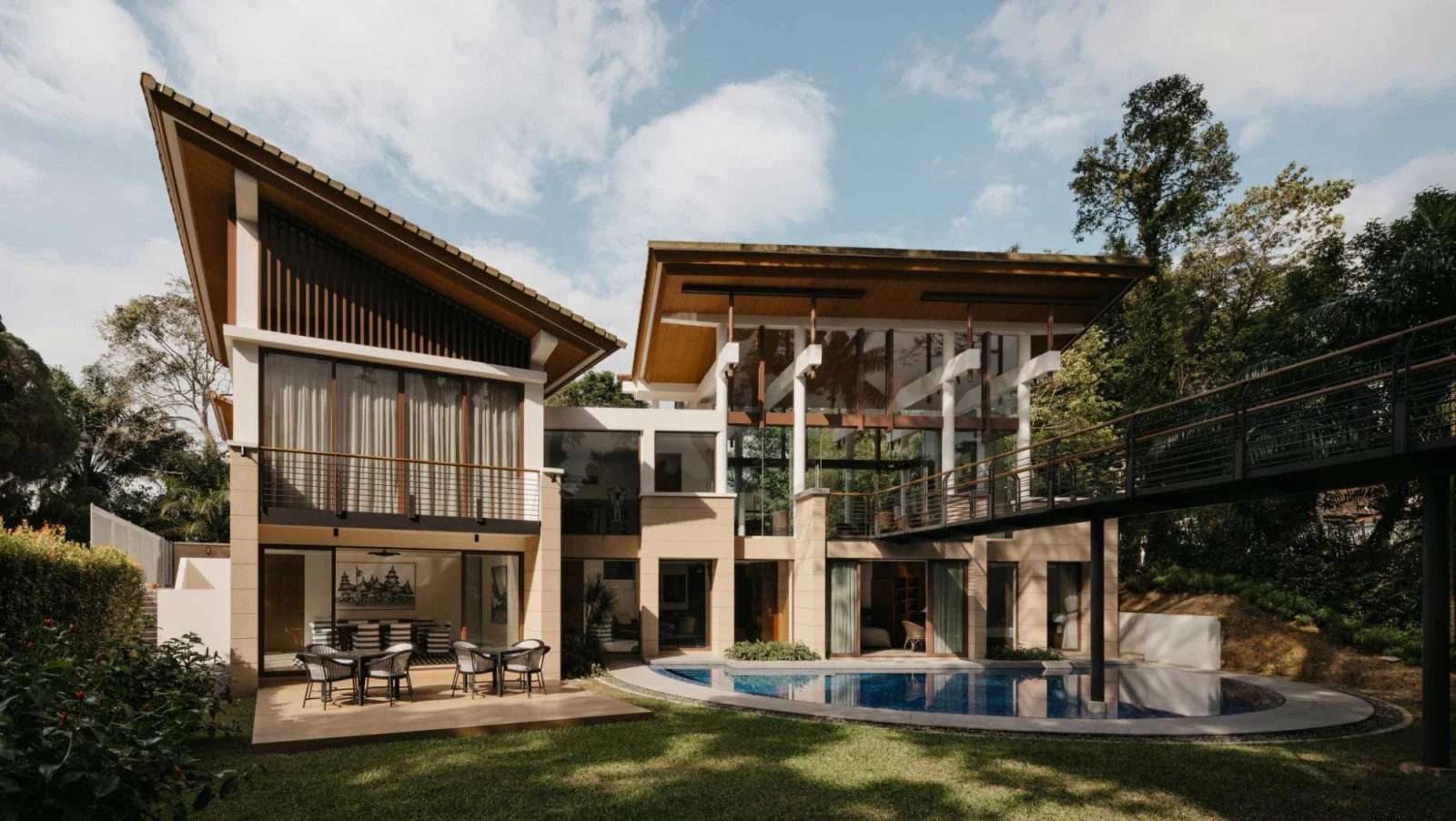
Under the Residential Property Act, landed residential property is restricted property. Foreigners and Permanent Residents may apply to the Land Dealings Approval Unit for consent to buy landed homes, assessed case by case — normally requiring at least five years of PR status and an exceptional economic contribution to Singapore.
That route does not extend to GCBs. The approval framework covers land not exceeding 15,000 square feet and not situated within a Good Class Bungalow Area. Since a GCB starts at roughly 15,070 square feet and sits by definition inside a GCB Area, it fails both limbs.
So the accurate statement is not that foreign purchase is rare or difficult. It is that GCBs are, as a matter of policy, reserved for Singapore citizens. The rule has stood since 2012. If you are not a citizen and are looking at landed property outside a GCB Area, what the Land Dealings Approval Unit actually assesses is set out separately, along with the conditions attached to approval.
This is the single largest reason GCB pricing behaves as it does. The buyer pool is not global capital — it is a few thousand Singaporean families. It is also why a GCB is often the last asset a wealthy family buys, and the last one they sell.
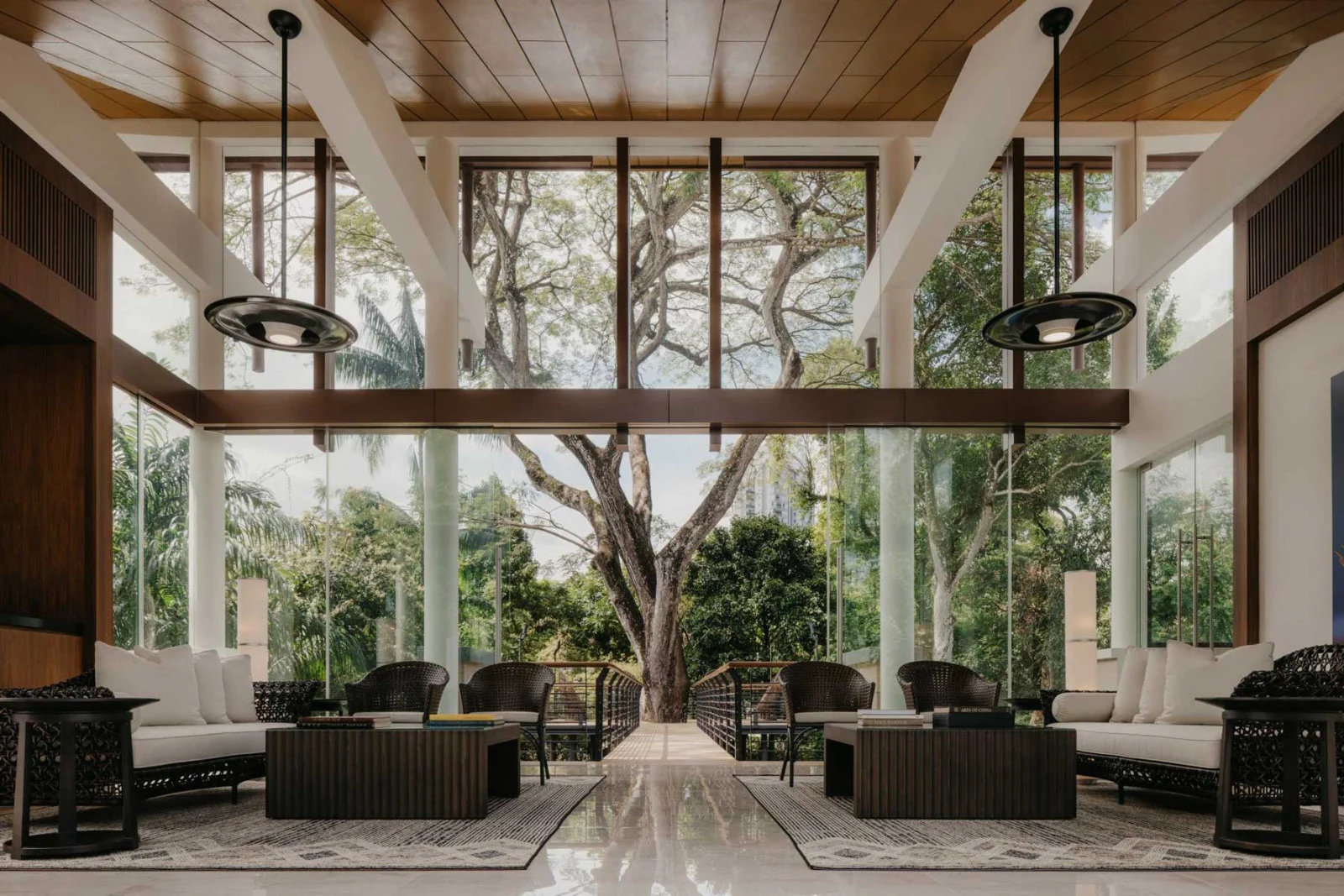
The gazetted areas cluster tightly in Singapore's prime residential belt.
The heaviest concentration sits in District 10 — Tanglin, Holland and Bukit Timah — which holds the addresses that define the category: Nassim Road, Cluny Park and Cluny Hill, Bin Tong Park, Ridout Park, Dalvey Estate, Queen Astrid Park, Leedon Park, Gallop Road/Woollerton Park, White House Park.
District 11 — Newton, Novena and Thomson — carries a further group including Bukit Tunggal and Chee Hoon Avenue. Beyond the core, clusters sit in District 20 (Caldecott Hill Estate), District 21 (Binjai Park, Brizay Park, Eng Neo Avenue, Ewart Park, King Albert Park, Windsor Park) and District 23 (Chestnut Avenue).
District matters enormously to price. A plot on Nassim Road and a plot on Chestnut Avenue are both, technically, Good Class Bungalows. They are not remotely the same asset.
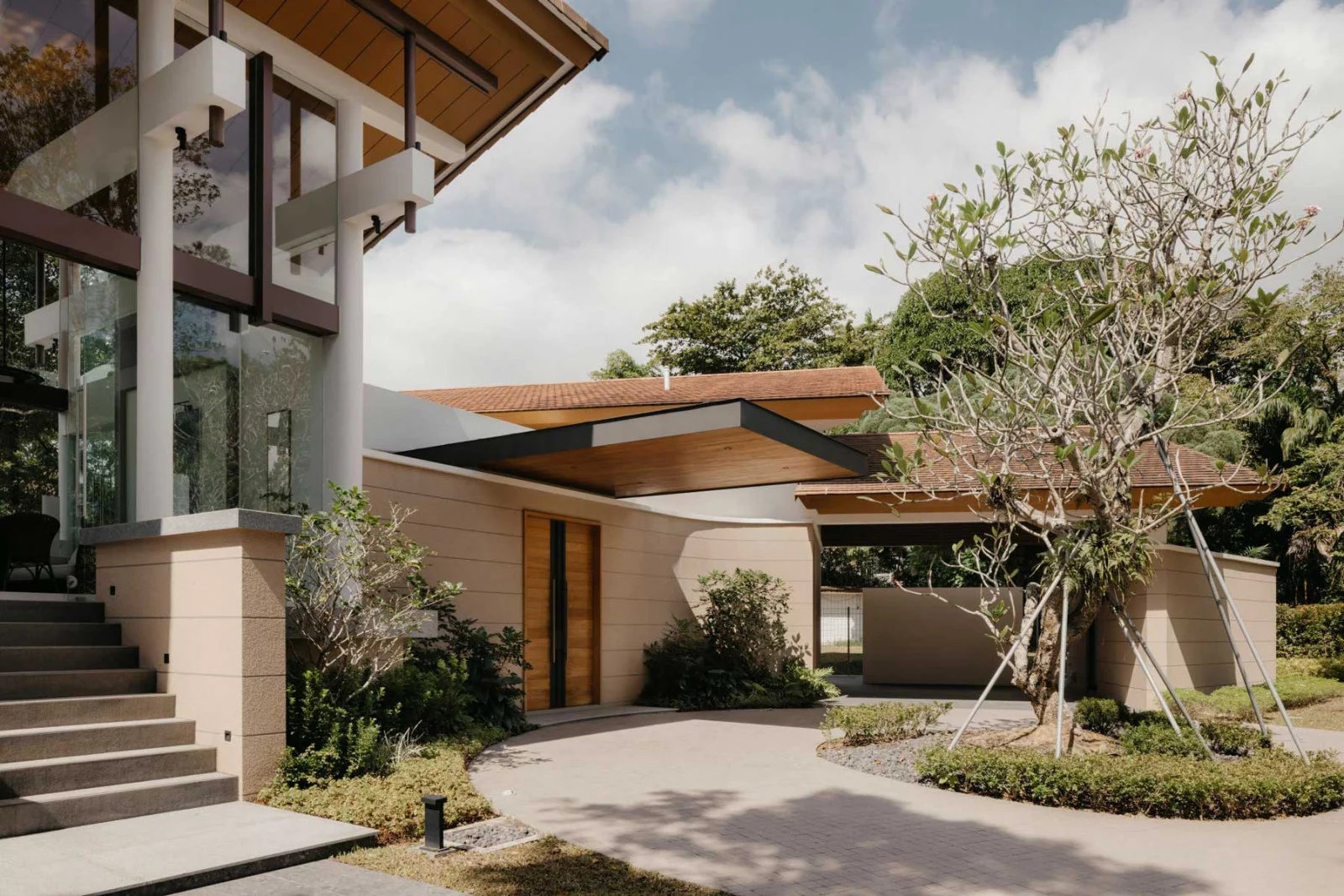
Everything above compounds into one lived experience: seclusion.
Low site coverage means houses sit well back and well apart. Deep road buffers with mandated green strips mean you do not see your neighbour's front door. Many GCB estates are laid out as cul-de-sacs, so there is no through traffic and no reason for anyone to be on your road who does not live there. Mature canopy does the rest.
The result is a level of privacy not available elsewhere on mainland Singapore at any price — not in a penthouse, not in a strata bungalow, not behind the best-staffed condominium gatehouse. For the people who buy these homes, it is frequently the whole point.
GCBs sit at the top of Singapore's residential hierarchy, and the ownership register reflects it: founders, multi-generational family businesses, principals of listed companies. Buyers are typically Singapore citizens whose core and investment portfolios are long since established, acquiring a legacy asset they expect to hold for decades and often pass on rather than trade.
A pattern worth knowing if you are buying: a significant share of GCB purchases are effectively land transactions. The buyer intends to demolish and rebuild to their own brief. When you assess a listing, the existing house may be close to irrelevant to what the market will pay — unless it is conserved, in which case it is the single most important fact about the property.
Current pricing, broadly:
| Segment | Typical range |
|---|---|
| Entry-level plots | S$10–20 million |
| Bukit Timah (D11 / D21) | S$15–40 million |
| Ultra-prime District 10 | S$40–80 million+ |
| Trophy plots | S$100 million+ |
The market moves in a narrow band on volume and a wide one on price, because each plot is genuinely unique. Q1 2026 saw an average land rate of S$1,803 psf; Q2 2026 rebounded to S$2,341 psf across seven caveated transactions. Those swings say more about which plots happened to trade than about any shift in underlying value.
The reference points at the top of the market:
Prices have proved unusually resilient through cooling measures and downturns, for a structural reason rather than a sentimental one: supply is fixed, the buyer pool is domestic and wealthy, and holders are rarely forced sellers. There is no distressed GCB market to speak of, because the people who own them do not need to sell into weakness.
A note on costs, since it is often glossed over. A GCB is not a tax-advantaged asset. Buyer's Stamp Duty on a purchase of this size runs into the millions; Additional Buyer's Stamp Duty applies if it is not your only residential property; and owner-occupier property tax is progressive on annual value, which puts a GCB in the top band. Rental is permitted and GCBs do let — but gross yields are thin, and nobody buys one for income. Confirm current rates with IRAS before modelling anything. And before you compare a GCB with anything else on price, note that land psf across terrace, semi-detached and detached homes runs well above what GCB land costs per square foot.
Five things worth doing before you make an offer.
Verify the property is inside a gazetted GCB Area on URA’s list. Adjacent is not inside.
Area, width and depth. A plot can pass on area and fail on width, and that changes what you are allowed to build.
A conserved bungalow is a different asset with a different cost base and a much narrower set of redevelopment options.
Two storeys, 12 metres, 45% coverage with a 35% sub-control, plus setbacks. That envelope determines what you can build — and what you can build determines what the land is worth to you.
With 60 to 90 transactions a year across 39 areas, the plot that fits your brief may appear once in eighteen months. Financing, structure and advisers should be arranged before you need them, not after.
We hold and transact in the gazetted areas — Belmont Road, Brizay Park, Cluny Park, Ford Avenue, King Albert Park, Swiss Club Road — and a significant share of GCB activity never reaches a public portal. If you are considering a purchase, or weighing whether to bring a plot to market, we will tell you what it is genuinely worth and what you can build on it before you commit to anything. For what is on the market now, see the plots we are marketing today, with land area, tenure and district on each. The people who handle these transactions, and the districts each of them covers, are listed on our team page.
Speak to our teamView current listingsGuidelines summarised here reflect URA’s development control handbook and circular DC24-05, applicable to development applications submitted on or after 1 March 2025. Planning controls, stamp duties and property tax rates change. Confirm current requirements with URA and IRAS, and take professional advice before transacting.